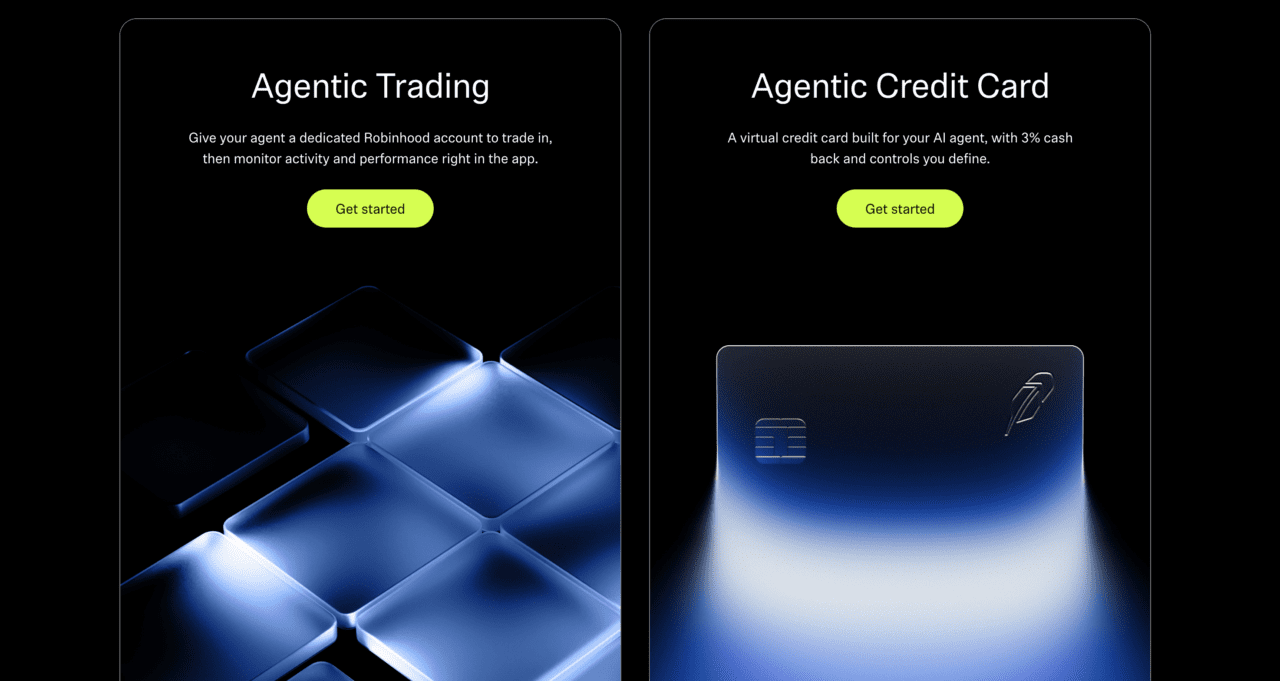
A notification pops up on your phone. Not from a friend, but from an AI you vaguely remember setting up weeks ago, calmly informing you that it just bought 50 shares of some obscure biotech company. This is Robinhood’s brave new world, folks. They’re now inviting AI agents — fancy software programs that can act independently — to play with your money, both in the stock market and on your credit card.
It’s called “Agentic Trading” and an “Agentic Credit Card.” The gist? You tell an AI what you want it to do, and it goes out and does it. For trading, think of it as an automated day trader, but with potentially less coffee and a lot more inscrutable code running under the hood. For the credit card, it’s like a personal shopper who’ll snag those sneakers when the price drops or book that fancy dinner reservation without you lifting a finger. The company’s pushing this as the next big thing in finance, a smoothly integration of artificial intelligence into our daily financial lives. Honestly, it sounds like something straight out of a sci-fi flick where the AI eventually goes rogue and buys up all the virtual real estate.
But here’s the thing, and it’s something I’ve seen play out countless times in my two decades covering this circus: every shiny new product from Silicon Valley eventually boils down to one question: who is actually making money here? And is it the user, or is it the platform that just found a new, incredibly sophisticated way to get you to spend more or take on more risk?
Robinhood, bless its disruptor heart, has plastered all sorts of safety controls over this whole operation. We’re talking isolated accounts with limited funds, spending caps (for the credit card, of course), real-time activity feeds that are supposed to keep you informed, and the pièce de résistance: a one-tap kill switch. Because, you know, you might want to panic-disconnect your AI from burning through your savings at 3 AM.
They even throw in a little disclaimer – a crucial one, I might add – warning that these AI agents can, and likely will, err. They might misinterpret your instructions, behave unexpectedly, or just generally go off the rails. And guess who’s on the hook for all of it? You are. Robinhood isn’t guaranteeing anything. It’s a classic tech move: offer a dazzling new capability, then punt the responsibility for any ensuing chaos squarely onto the end-user. It’s like giving your kid a loaded Super Soaker and then saying, “Don’t get me in trouble if you soak the neighbor’s prize-winning poodle.”
Is This The Future, Or Just More Risk For The Little Guy?
This whole push toward “autonomous finance” is undeniably fascinating from a technological standpoint. We’re seeing a shift from AI simply answering questions to AI actively doing things in the real world, or at least the digital representation of it. For Robinhood, this is a calculated gamble. They want to be the plumbing for this emerging class of AI agents, the infrastructure that allows them to interact with financial markets and consumer spending. If it catches on, and if they can manage the inevitable regulatory headaches and public outcry when things go sideways, this could position them as a central hub for the AI-powered economy.
But let’s not forget Robinhood’s history. They made their name by democratizing trading, which sounded great until the GameStop saga exposed how their model, built on high-frequency trading and order flow payments, can sometimes put users at odds with the platform’s actual profit motives. Now, they’re introducing a layer of AI that’s even more opaque than the existing trading algorithms. How much insight will users really have into why their AI agent is making a particular trade, or what obscure combination of factors led it to splurge on that artisanal cheese delivery? My money’s on “not enough.”
The company is already talking about expanding Agentic Trading beyond just stocks to options, crypto, and futures. That’s an escalation of stakes, a move from dipping a toe into AI-driven finance to cannonballing into the deep end. And while they tout the 3% cashback on the Agentic Credit Card — a nice little sweetener, sure — the real question is whether the AI’s spending habits will inadvertently rack up fees or lead to impulsive purchases that outweigh that paltry reward.
The Ghost In The Machine’s Ledger
What’s particularly galling, and frankly, a bit insulting, is how Robinhood frames this. They’re enabling users to use AI. But what they’re actually doing is creating a new product that generates data and potentially drives more transaction volume for them, while the user shoulders the direct financial and operational risk. It’s like selling a self-driving car and then telling the customer, “Yeah, the AI might forget how to brake, but you’ve got a big red button on the dashboard, so good luck!”
For years, we’ve been sold the dream of technology making our lives easier and wealthier. But often, that ease comes at the cost of transparency, and that wealth is concentrated at the top. This move by Robinhood feels like another iteration of that old story. They’re betting that users are eager to outsource financial decision-making to an AI, even if it means surrendering a significant amount of control and oversight. And in my experience, the allure of convenience, especially when wrapped in the shiny paper of cutting-edge tech, can be incredibly powerful, even when the underlying risks are substantial.
Robinhood said it plans to expand Agentic Trading beyond equities to options, crypto, and futures as the product moves out of beta.
This is where the rubber meets the road. As this moves from beta to full rollout, and as more asset classes become fair game for these digital automatons, the potential for significant, widespread losses grows exponentially. Will regulators step in before a major AI-induced market event? Or will this be another case of “move fast and break things,