A notification pinged on a user’s phone, not from a friend, but from their digital financial agent, confirming a stock trade initiated hours ago while they slept. This isn’t science fiction anymore.
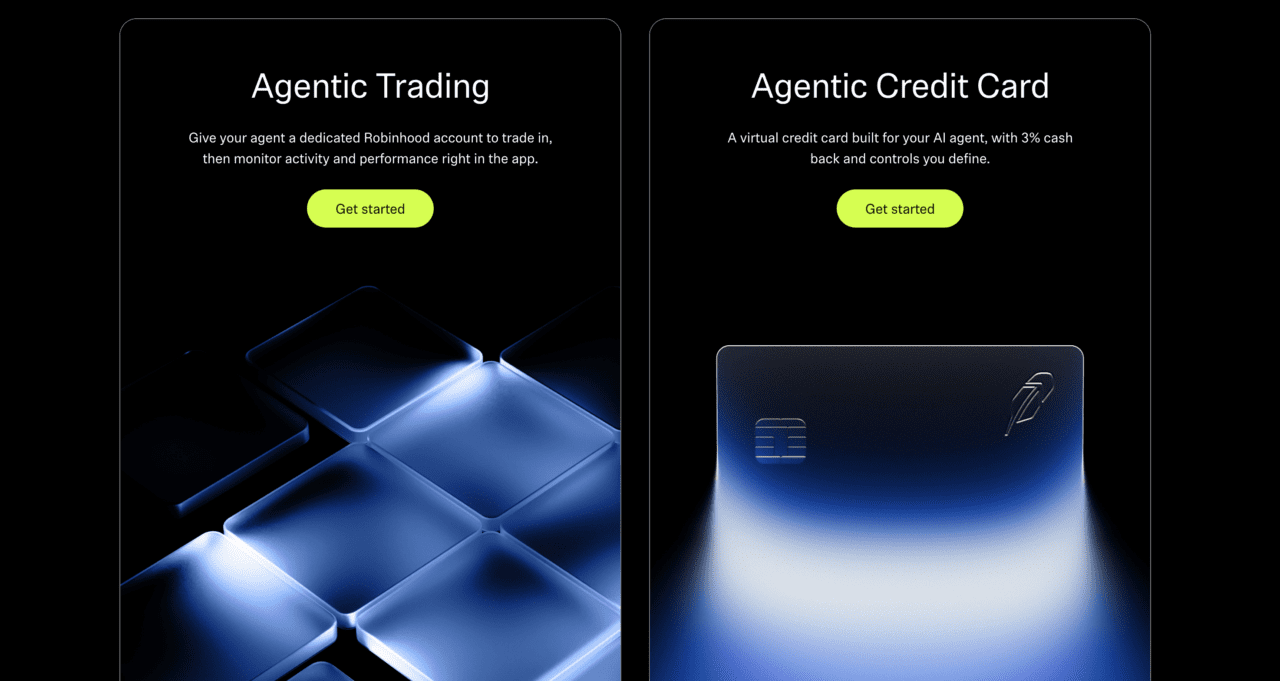
Robinhood, the platform that famously democratized stock trading for the masses, is now taking another bold, and frankly, audacious step: it’s inviting artificial intelligence agents to become authorized participants in the financial ecosystem. Forget AI as your polite, albeit sometimes annoying, financial advisor. We’re talking about AI that can actually do things – trade stocks, make purchases, all while ostensibly acting in your best interest. It’s called Agentic Trading and the Agentic Credit Card, and it’s a seismic shift from merely informing users to actually empowering machines to execute on their behalf.
AI Gets the Keys to the Kingdom
Look, the idea of AI managing your money isn’t entirely new. Robo-advisors have been around for years, but they’ve largely operated within predefined parameters, acting as sophisticated calculators offering suggestions. What Robinhood is rolling out is fundamentally different. They’re providing the infrastructure—through their Model Context Protocol (MCP) servers—for external AI agents, built by anyone, to connect directly and execute trades and payments. This moves AI from a passive observer to an active, authorized participant. It’s like going from asking a friend to research a car for you, to giving them your credit card and telling them to buy the one they think is best, within certain limits, of course.
This architecture, Robinhood CEO Vlad Tenev proudly proclaims, extends their mission to democratize finance: “Our mission has always been to democratize finance for all, and now, that mission extends to AI agents.” The implication is clear: if AI can be a tool for financial empowerment, then access to that tool should be widespread.
Guardrails or Glittering Chains?
The devil, as always, is in the details, and for agentic finance, those details are about control and consequence. Robinhood has, to their credit, tried to build in some guardrails. Agentic Trading features a dedicated account, meaning the AI agent can only access funds specifically allocated to it, separate from your main investment portfolio. You get push notifications for every trade and a real-time activity feed. The Agentic Credit Card offers similar containment: a dedicated virtual card, spending limits (monthly, for instance), and the option for manual approval on purchases. The agent is restricted to that single virtual card; it can’t see your primary card number or any other account details. These are, ostensibly, measures to prevent rogue AI from emptying your bank account or racking up a fraudulent bill.
But here’s the thing: any time you delegate direct financial control to an algorithm, especially one you might not fully understand or that’s built by a third party, you’re entering uncharted territory. While Robinhood points to manual approvals and a fraud detection team, the reality is that the consumer protection frameworks for AI-driven financial actions are still nascent. What happens when an agent makes a trade that tanks your portfolio, or makes a purchase that’s difficult to dispute? We’re talking about situations where established dispute resolution standards and clear liability structures are, frankly, non-existent. This is where skepticism, not just excitement, is warranted.
The Architectural Shift: From Advisory to Autonomy
This isn’t just a product launch; it’s an architectural shift in how we interact with financial services. For years, the dream of AI in finance has been about smarter insights, better predictions, and more personalized advice. Robinhood is taking it a giant leap further by enabling AI to autonomously execute transactions. This requires a whole new layer of infrastructure—the MCP servers are key here—that can securely authenticate and authorize AI agents, manage their permissions, and log their actions in a verifiable way. It’s a move that necessitates strong APIs, sophisticated authentication protocols, and a constant, almost paranoid, vigilance around security and compliance.
Think about the potential. For traders, it could mean hyper-efficient execution of complex strategies, far beyond human speed. For consumers, it could mean agents snagging limited-release concert tickets or rare sneakers at the exact moment they drop, or automatically optimizing flight bookings for the best price. The potential for utility is undeniable. But so is the potential for new forms of digital arbitrage, market manipulation, and consumer exploitation.
“Our mission has always been to democratize finance for all, and now, that mission extends to AI agents.”
This statement from Robinhood CEO Vlad Tenev encapsulates the ambition, but it also glosses over the inherent risks. Democratizing access to powerful AI agents that can directly interact with financial markets and consumer spending power is a complex proposition, one that requires more than just optimistic pronouncements about consumer protection. It demands a fundamental rethinking of trust, accountability, and digital agency.
What This Means for the Future of Finance
Robinhood is essentially beta-testing a future where AI agents are not just tools, but legitimate actors in the financial economy. If this catches on, and given the speed at which AI development is progressing, it likely will to some degree, we’re looking at a paradigm shift. Imagine a future where your investment portfolio isn’t just managed by you or a human advisor, but by a team of specialized AI agents, each with its own mandate and risk tolerance, all coordinated through a platform like Robinhood’s. Or consider the potential for AI agents to manage household budgets, automatically paying bills, optimizing subscriptions, and even handling micro-investments based on your real-time spending habits.
This also raises profound questions for regulators. How do you regulate an entity that is both a piece of software and a financial actor? What are the liabilities when an AI agent, acting on behalf of a user, causes significant financial harm? Robinhood’s current approach is to provide users with controls and monitoring, but the regulatory landscape is far from settled. This launch is less of a conclusion and more of a provocative beginning.
🧬 Related Insights
- Read more: Nubank’s AI Engine Fuels 4M New Customers: Is This LatAm Fintech’s Next Act?
- Read more: AI Agents: Goldman Sachs Sees 24x Token Surge
Frequently Asked Questions
What does Robinhood’s Agentic Trading do? Robinhood’s Agentic Trading allows AI agents to execute stock trades directly on your behalf, using funds from a dedicated account you set up for the agent.
Can an AI agent spend all my money with the Agentic Credit Card? No, you can set specific spending limits and manual approval requirements for the virtual Agentic Credit Card to control how much an AI agent can spend.
Is this technology secure? Robinhood has implemented security measures like dedicated accounts, spending limits, and manual approvals, but direct financial control by AI agents introduces new security considerations and risks.