Did you ever stop to think about the unseen gears turning the wild, wild world of crypto trading? We talk about decentralization, transparency, and the blockchain’s immutable ledger. But what happens when those very qualities become a massive liability for the folks keeping the lights on? For market makers, the lifeblood of any liquid market, it turns out transparency is a double-edged sword, and they’re starting to look for an exit.
Here’s the thing: in traditional finance, it’s practically a given that big players have their secret sauce. Think of Wall Street’s “dark pools” – private trading venues where massive orders can be placed without tipping off the entire market. This isn’t just about hiding; it’s about strategy. If everyone sees your giant buy order coming, the price will skyrocket before you can even execute. It’s like showing your hand in a poker game before the betting even starts. And while crypto touts its disruption, it’s mostly replicated one of TradFi’s most annoying structural problems: if you’re big enough to move markets, everyone can see you coming.
This is where GoDark, a fledgling startup operating on Solana, steps onto the stage. Their ambition? To build the crypto equivalent of those hushed, off-exchange trading floors. They’re not just borrowing an idea; they’re deploying a cutting-edge technological marvel: zero-knowledge proofs. This isn’t your garden-variety encryption. Zero-knowledge proofs allow one party to prove the truth of a statement to another party without revealing any information beyond the truth of the statement itself. Mind-bending, right? Imagine proving you have enough money in your bank account to buy a yacht, without revealing your exact balance or who you are. GoDark is aiming to do just that for trades.
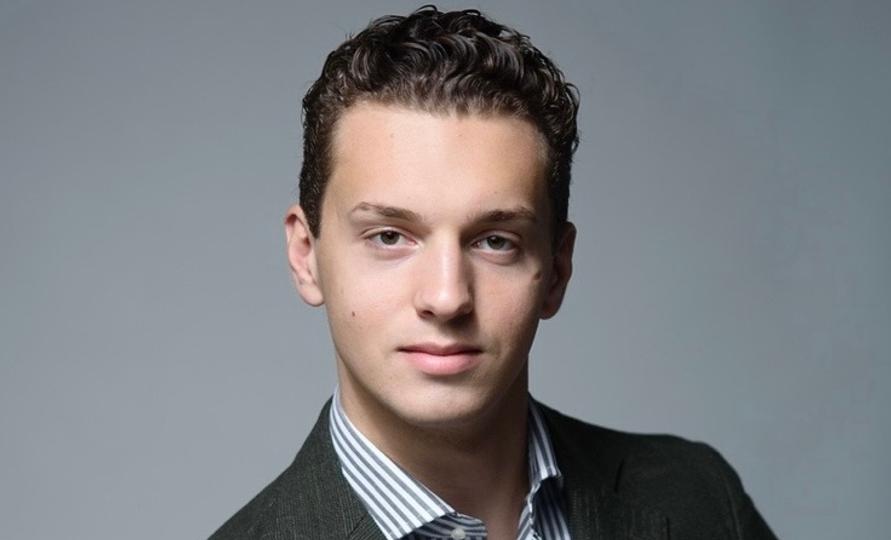
So, what does this mean in practice? According to Denis Dariotis, co-founder of GoQuant (the firm backing GoDark), on platforms like Hyperliquid, top market makers are forced to reinvent their strategies every three weeks. That’s not just annoying; it’s a direct attack on their profitability, their “alpha.” This constant churn, driven by the fear of strategy replication, is exactly what GoDark wants to eliminate.
On Hyperliquid, one of the top market makers told us they have to rotate their trading strategies every three weeks because they get copied.
That’s the alpha problem.
And let’s not forget the public shaming aspect. In the transparent world of crypto, market makers often find themselves in the crosshairs whenever things go south. The recent whispers about Jane Street’s role in the Terra/Luna collapse are a prime example. On a public blockchain, every trade is scrutinized, narratives are spun, and companies are forced into reactive PR battles for activity that, in a traditional setting, would be utterly unremarkable.
The Speed Bump: Latency vs. Secrecy
But here’s the rub, and it’s a big one. Zero-knowledge proofs, while revolutionary, are computationally intensive. This means they can be slower. GoDark’s internal tests show order matching in the 25-50 millisecond range. Now, Dariotis rightly points out that this is faster than many existing decentralized exchanges, which can take hundreds of milliseconds. But for the high-frequency trading firms GoDark is trying to attract, that’s still a significant gap compared to the lightning-fast speeds available on centralized exchanges. It’s like trading a souped-up sports car for a very sophisticated, very quiet electric scooter. It gets you there, but maybe not as quickly as you’d like.
Bootstrapping Liquidity: The Eternal DEX Dilemma
Beyond speed, there’s the age-old challenge that plagues most decentralized exchanges: how do you get people to trade on your platform, and keep them trading, once the initial hype and incentives wear off? GoDark plans to mirror Hyperliquid’s successful HLP (Hyperliquid Liquidity Pool) model. Users deposit funds, which then become market-making liquidity. Participants get a cut of the fees and preferential access to liquidations. It worked for Hyperliquid, sure, but many DEXes that tried to copy it have seen their volume vanish faster than a free NFT mint.
The Regulatory Fog: A Dark Pool’s Blind Spot?
The elephant in the room, however, is regulation. Traditional dark pools, while private, are still subject to post-trade reporting and oversight. GoDark’s privacy model is designed to be much more absolute. It’s inherently incapable of generating a complete audit trail. While they’re incorporating OFAC screening (a nod to compliance), it’s hard to see how this satisfies regulators who have been pushing for more transparency in crypto, not less. Will this force GoDark and similar platforms to only operate in jurisdictions with lax oversight? It’s a fascinating tension, and one that will shape the future of private trading in the digital asset space.
My Take: The Platform Shift We Didn’t Realize We Needed
Forget incremental improvements. What GoDark represents is a fundamental platform shift. We’ve been so focused on building a more transparent financial system that we’ve overlooked the critical need for privacy in certain, crucial areas. This isn’t about enabling illicit activity; it’s about fostering innovation and allowing sophisticated financial actors to operate efficiently without being constantly hampered by the digital equivalent of a paparazzi swarm. Think of it like this: we’ve spent years building brighter and brighter spotlights for the blockchain. Now, someone’s building a discreet, high-tech room with a one-way mirror. It’s not about hiding from the market, it’s about building a more effective market within the market. The question isn’t if this will happen, but how it will be integrated without compromising the core ethos of decentralization—a challenge that has, admittedly, tripped up many before.
This is more than just another DEX; it’s a statement. It’s a challenge to the status quo, a bet that the future of finance will involve not just openness, but also the strategic deployment of privacy, enabled by technologies like zero-knowledge proofs. It’s a future where the largest players can make their moves without the entire world watching their every step, allowing for deeper, more sustainable liquidity and potentially, more stable markets. And that, my friends, is a future worth watching.