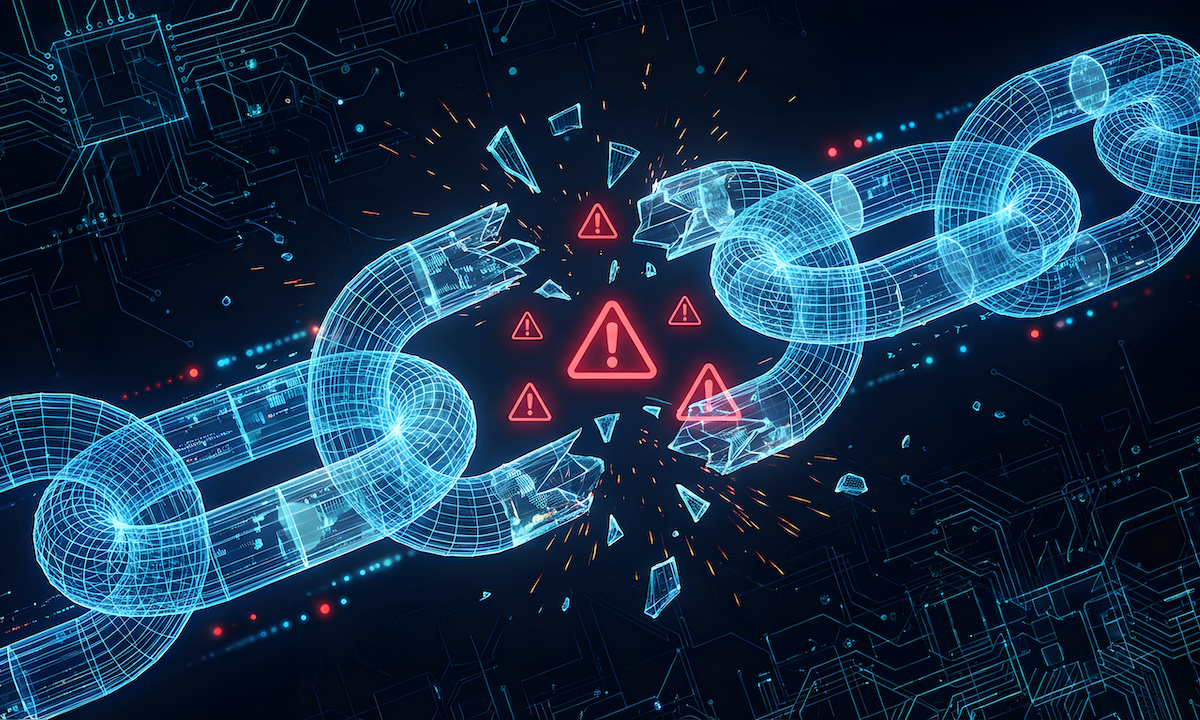
Here’s the thing: $1.1 billion. That’s the grim tally of funds vanished from decentralized finance protocols in the last 365 days. This isn’t just a blip; it’s a hemorrhaging wound, and now, a stark warning from OpenZeppelin CEO Manuel Aráoz suggests the bleeding might be far harder to stop than anyone imagined.
Aráoz dropped a bombshell on X this week, declaring, “I now consider all of DeFi unsafe.” His reasoning? The terrifying ascent of AI coding agents that have, in his estimation, become “superhuman” at identifying vulnerabilities in smart contracts. This isn’t hyperbole; it’s a data-backed assessment from someone at the coal face of blockchain security.
The numbers paint a grim picture that Aráoz’s pronouncement only sharpens. DeFi’s total value locked (TVL) has plunged by over $20 billion this year. While market downturns play a role, the relentless drumbeat of high-profile hacks—think Kelp DAO’s $292 million exploit in April or Step Finance’s $27 million undoing earlier this year—is undeniably eroding confidence.
The Asymmetric Battlefield
What Aráoz highlights is the fundamentally asymmetric nature of smart contract security. Defenders must build an impenetrable fortress, patching every single crack and crevice in their code. Attackers, however, need to find just one undiscovered weakness, one unguarded back door, to unleash chaos and siphon away assets. And now, it seems, AI is becoming the ultimate master locksmith for those seeking illicit entry.
We’re talking about models like Anthropic’s restricted Claude Mythos. This AI, according to the company itself, can autonomously discover software vulnerabilities and craft working exploits. The speed and sophistication at which these tools can operate fundamentally outpace human developers and security teams. Imagine a tireless, infinitely patient hacker with an intimate understanding of every line of code—that’s the threat.
Is DeFi’s Transparency Now a Liability?
For years, DeFi’s transparency—its on-chain code being publicly auditable—was touted as a feature, a badge of trust. But what happens when that very transparency becomes a feeding ground for hyper-efficient AI attackers? These AI agents can scan, analyze, and identify weaknesses at speeds that make human analysis look glacial. The race to patch vulnerabilities is a race against a machine that doesn’t need sleep, coffee, or a lunch break.
This dynamic shift raises serious questions for the entire decentralized finance ecosystem. Protocols built on the promise of immutability and code-driven trust now face an existential threat from AI that can dissect that code faster than we can fix it. It’s a cybersecurity arms race where the defender’s advantage is shrinking with every advance in AI.
The recent announcement from Coinbase’s Base network, introducing “Base MCP” to connect crypto wallets with AI tools like ChatGPT and Claude for DeFi interactions, feels particularly ironic—or perhaps prescient, depending on your outlook. While the stated goal is user-friendly interaction, it also underscores the deepening integration of AI into the financial fabric, a fabric that is apparently already showing significant tears.
A Historical Echo?
This isn’t entirely uncharted territory. Throughout history, technological leaps have consistently introduced new attack vectors. From the early days of network intrusion to sophisticated zero-day exploits, the cat-and-mouse game between innovators and malicious actors is a constant. However, the scalability and speed of AI-powered attacks introduce a novel, potentially exponential escalation.
Think about it: A human hacker might spend weeks or months probing a complex smart contract. An AI agent, given the right architecture and training, could potentially achieve a similar or superior result in hours, or even minutes. This speed differential is what makes Aráoz’s warning so potent. It shifts the timeline of vulnerability from days and weeks to potentially hours, drastically shrinking the window for defense.
What Does This Mean for the Average DeFi User?
For the average user, the immediate takeaway is a heightened need for caution. The promise of DeFi—decentralized, permissionless finance—relies on a foundation of security that is now demonstrably under immense pressure. Diversifying assets, understanding the risks associated with specific protocols, and staying informed about security audits and potential exploits are no longer optional extras; they’re survival skills in this new environment.
This development also puts immense pressure on smart contract developers and auditing firms. The tools at their disposal need to evolve rapidly to match the threat. We’re likely to see a surge in demand for AI-assisted security tools for defense, mirroring the AI-driven attacks. The future of DeFi security may well depend on our ability to weaponize AI against those who would exploit it.
Aráoz’s statement isn’t just a warning; it’s a market signal. It suggests that the perceived safety of DeFi has been fundamentally undermined. Investors and users will likely demand greater assurances, more strong security measures, and potentially a reassessment of how smart contract risk is priced into the market. The decentralized dream might be facing its most decentralized nightmare yet, powered by artificial intelligence.
**
🧬 Related Insights
- Read more: Senate Unveils Crypto Bill: What It Means for Your Wallet
- Read more: Derivative Path & Baton: Mid-Market FX Gets a Hybrid Overhaul
Frequently Asked Questions**
What does “superhuman” at hacking mean in this context?
It means AI systems can analyze code and find vulnerabilities at a speed and scale that surpasses human capabilities, identifying weaknesses humans might miss or take significantly longer to discover.
Will AI replace human hackers or security experts?
It’s more likely to augment both. AI can automate many detection and exploitation tasks, but human oversight, strategic thinking, and the development of new defensive AI will remain critical.
Is it possible to secure smart contracts against AI hackers?
It’s an ongoing challenge. The focus will likely shift to developing AI-powered defenses, advanced formal verification methods, and potentially creating more resilient smart contract architectures.