The little green dollar sign, a universal symbol for commerce, often feels like a foreign concept when you’re navigating a subscription service from another continent.
This isn’t just about vanity metrics; for subscription businesses, pricing isn’t a static number. It’s a dynamic, often painful, negotiation with foreign exchange rates, conversion fees, and the ever-present specter of customer churn. Imagine signing up for your favorite streaming service, only to see the monthly bill fluctuate wildly because the exchange rate shifted overnight. For subscription businesses, this inconsistency is a death knell, leading to failed renewals and a quick exit from the customer’s digital wallet.
It’s a knotty problem. Businesses want to expand globally, tapping into burgeoning markets. But localizing even a simple one-time purchase involves absorbing FX risk, paying conversion fees, and a constant whack-a-mole game of updating price lists. For recurring revenue models, however, this complexity multiplies. Customers expect predictability. A subscription is a commitment, a recurring payment, and any unexpected jump in price — even a small one — can trigger a cancellation. Frankly, a significant chunk of subscription transactions (80% as of 2025, according to Stripe’s data) were still being priced in the company’s default currency, a proof to the sheer difficulty of doing it right.
Now, Stripe is rolling out Adaptive Pricing as part of its Optimized Checkout Suite. The pitch is simple: present prices in the customer’s local currency, and let Stripe handle the messy backend. This isn’t just about showing a different number; it’s designed to keep renewal amounts consistent, thanks to a built-in ‘stability buffer’ that smooths out exchange rate volatility. So, a Brazilian customer paying R$49.60 per month won’t suddenly see a different figure each time their bank does a currency conversion from USD. The promise is continuity, a familiar anchor in the choppy seas of international finance.
Digging Into the Data: How Adaptive Pricing Performs
Stripe didn’t just release this on a hunch. They’ve been testing it, crunching numbers from 1.5 million subscription checkout sessions in a private preview. The methodology is classic A/B testing, comparing sessions that utilized Adaptive Pricing against a 1% randomized holdback group. The analysis looked at both immediate signup outcomes (conversion, authorization rates) and longer-term subscription performance (duration, lifetime value – LTV).
The initial results are, frankly, compelling. At the signup stage, Adaptive Pricing nudged conversion rates up by an average of 4.7%. Authorization rates, meaning the percentage of payments that actually went through, also saw a healthy 1.9% increase. This isn’t just about getting more clicks; it’s about turning those clicks into actual, paying subscribers.
People are more likely to complete a purchase when they see prices in a currency they immediately recognize and understand, without needing to mentally convert the total cost. Localized pricing can make subscriptions feel more transparent, since customers are committing to an ongoing charge rather than a one-time payment.
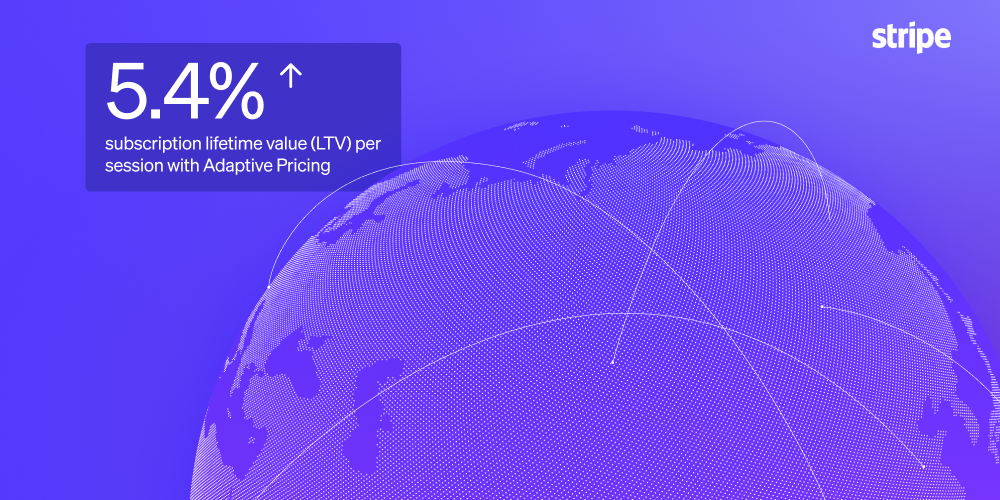
This jump in conversion and authorization isn’t just a vanity boost. Stripe claims it translates directly into downstream value, with an average increase in LTV per session of 5.4%. Some businesses saw staggering gains, exceeding 30%. Runway, for instance, reported a 14% LTV increase per session and a 17.7% higher LTV per subscription for those using Adaptive Pricing. The reasoning is straightforward: when a price point is instantly comprehensible, friction dissolves. Customers aren’t left squinting at their calculator, trying to figure out if that $19.99 subscription is actually a good deal in their local currency. It’s transparent, it’s immediate, and it feels less like a gamble.
Furthermore, charging in local currency can also directly improve payment processing. Cross-border transactions often face more scrutiny and higher rejection rates from banks. Presenting the charge in a familiar currency, processed domestically, can significantly de-risk the transaction. The 1.9% uplift in authorization rates isn’t accidental; it’s a direct consequence of reducing the perceived risk for both the customer and the financial institutions involved.
The Long Game: Beyond the Signup Bump
The implications for customer lifetime value are profound. Higher initial conversion rates are great, but the real gold in subscriptions lies in retention and renewals. Stripe’s data suggests that localized pricing isn’t just a signup incentive; it fosters better long-term engagement. Customers who pay in their local currency tend to stick around longer. This suggests that the perceived transparency and ease of payment established at signup create a foundation of trust that supports ongoing subscription health.
Even small, consistent improvements in conversion and payment success, when compounded over thousands or millions of subscribers, can unlock substantial growth. It’s the compounding effect of predictable pricing and smoother payment flows that truly bolsters subscriber value over time. This move by Stripe isn’t just about a new feature; it’s an architectural shift that acknowledges the messy reality of global commerce and builds a more strong, human-centric financial plumbing for the subscription economy. It’s about making the global feel local, one transaction at a time.
Why Does This Matter for Developers and Businesses?
For developers building subscription platforms, this presents an opportunity. Integrating with Adaptive Pricing means offloading a significant piece of complexity that has historically required custom engineering and ongoing maintenance. The operational burden of managing currency fluctuations, conversion rates, and financial reporting can be substantial. By abstracting this away, Stripe allows businesses to focus on their core product and customer experience.
From a strategic standpoint, it’s about democratizing global expansion. Smaller businesses that might have shied away from international markets due to the financial complexities can now more readily pursue global growth. It’s about lowering the barrier to entry for businesses that want to tap into the 95% of the world’s purchasing power that resides outside their home country. The architecture here is key: a smart, dynamic layer that insulates both the business and the customer from the gnarly details of international finance.
🧬 Related Insights
- Read more: FinCEN’s AML Shakeup: Risk-Based Rules Target Real Threats, Not Checklists
- Read more: Goldman Sachs Earnings Beat, Shares Drop 4% [Why?]
Frequently Asked Questions
What is Stripe Adaptive Pricing? Stripe Adaptive Pricing is a feature within their Optimized Checkout Suite that automatically presents subscription prices in a customer’s local currency, managing currency conversion and operational complexities behind the scenes. It also includes a stability buffer for consistent renewal pricing.
Will Adaptive Pricing replace my current payment gateway? Adaptive Pricing is a feature that integrates with Stripe’s existing payment processing capabilities. It’s designed to enhance the checkout experience for subscriptions and doesn’t necessarily replace your entire payment gateway setup if you use multiple providers, but it does provide a localized currency option for Stripe-processed transactions.
How does the stability buffer work for renewals? The stability buffer in Adaptive Pricing helps keep subscription renewal amounts consistent. While it aims to minimize fluctuations due to exchange rates, significant rate movements may still result in adjustments to renewal amounts for that specific billing cycle, similar to how credit card issuers handle currency conversions.