The Senate Banking Committee is finally gearing up for a crucial markup hearing on the Digital Asset Market Clarity Act of 2025, universally known as the Clarity Act, slated for Thursday, May 14th. This isn’t just another legislative shuffle; this is the moment where disparate threads of digital asset regulation might, just might, begin to weave together into something resembling a coherent mix.
For months, this bill has been languishing, a sort of legislative Schrödinger’s cat – both alive with potential and dead in the water depending on who you asked. One of the biggest stalemates? The thorny issue of stablecoin yield. It sounds arcane, I know, but imagine trying to build a skyscraper when the very foundation keeps shifting under your feet. That’s what it’s been like for crypto companies and regulators alike.
But here’s the spark of forward motion: Senators Thom Tillis and Angela Alsobrooks have reportedly brokered a compromise. The details are still a bit hazy, as the full text wasn’t public at press time, but the gist is this: no more offering yields on “static” stablecoin reserves. Think of it like this: if you’ve got a pile of cash just sitting there, earning interest isn’t the big win. However, if those stablecoins are actively engaged in something, performing a function, then rewards are on the table. It’s a subtle distinction, but for the industry, it’s the difference between a clear path and a dead end.
This is where the human element, the messy back-and-forth of policy, really shines through. Coinbase, a major player, had previously signaled its withdrawal of support over these very provisions. Their CEO, Brian Armstrong, basically said, “You can’t build a stable digital economy if you’re tinkering with the bedrock of its funding.” Now, with this compromise, there’s a flicker of hope that the foundational piece might just be solidifying.
The Sound of Skepticism
Yet, not everyone is popping champagne corks. Banking industry groups, ever the cautious navigators of financial waters, have voiced their continued concerns. A joint letter from a coalition of trade associations—including the American Bankers Association and the Bank Policy Institute—essentially stated, “We appreciate the effort, but more work is needed.” They’re pushing for specific edits, a subtle but significant plea to ensure innovation doesn’t come at the expense of consumer protection. It’s the classic tightrope walk: how do you embrace the shiny new toys of digital assets without dropping the ball on safeguarding everyday folks? The banking industry wants to ensure the safety net is truly strong.
This pushback, however, seems unlikely to derail the immediate progress. The very fact that a markup hearing is scheduled signals a legislative will to move forward, even if not every single stakeholder is entirely satisfied. It’s like being on a ship: you can’t wait for every single passenger to agree on the exact direction to the nearest island before setting sail. Sometimes, you just have to point the bow and start chugging along.
The Ethics Question: A Lingering Ghost?
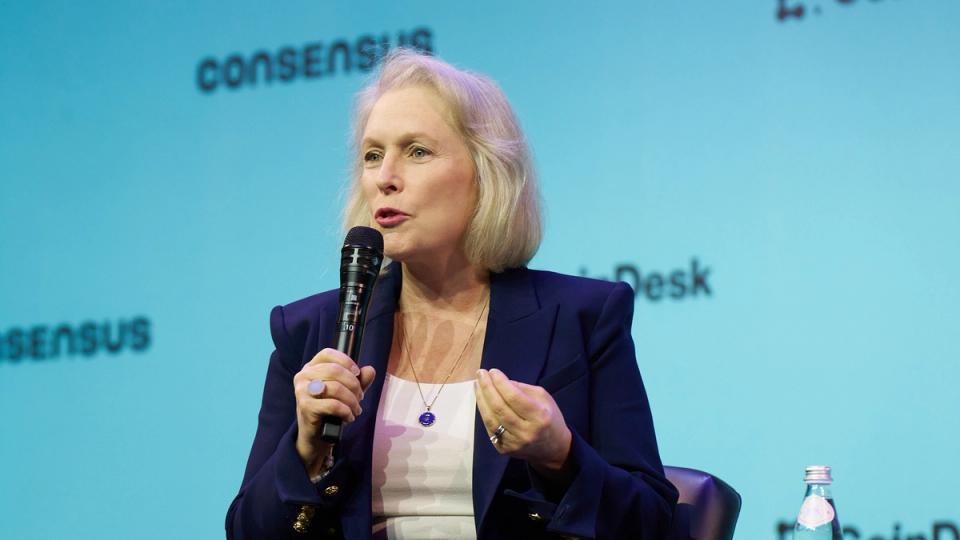
Beyond the stablecoin specifics, other dragons still lurk in the digital den. Senator Kirsten Gillibrand, a longtime advocate for a more progressive crypto stance, has been vocal about an essential ethical provision: barring senior government officials from profiting from the crypto industry while they’re in the process of regulating it. Her office recently pointed to polling data showing that a staggering 73% of voters agree with this sentiment. Imagine a referee also placing bets on the game they’re officiating – it erodes trust instantly.
This ethical quandary, however, might not be resolved in this Senate Banking Committee version. The legislative journey is rarely a straight line. After this markup, the bill needs to be harmonized with a separate version being developed by the Senate Agriculture Committee. It’s a bit like a multi-stage rocket launch; each stage has to perform perfectly before the next one ignites.
This entire process underscores a fundamental truth about technological advancement and its regulation. We’re not just talking about a new app or a faster payment system. We’re witnessing a platform shift, akin to the advent of the internet itself. AI, blockchain, and digital assets are not just tools; they’re the new operating systems for finance. And the Clarity Act, imperfect as it may be, is an attempt to write the first chapter of the user manual for this new operating system. The real test won’t be in the legislation itself, but in how it allows this burgeoning ecosystem to grow, innovate, and, crucially, remain trustworthy.
Will this act truly bring clarity, or will it just add another layer of complexity? Only time will tell, but this hearing is a significant indicator of legislative intent. It’s a signal that the powers-that-be are no longer content to just watch the digital asset train speed by; they’re ready to try and board it, and perhaps even steer it.
Will this replace my job?
While the Clarity Act focuses on market structure and regulation, it doesn’t directly aim to replace jobs. Instead, it seeks to create a clearer regulatory environment, which could lead to more stability and potentially new opportunities within the digital asset industry. However, as AI and automation continue to advance, some roles within finance may evolve or be automated over time, regardless of specific legislation.
What is the Clarity Act?
The Clarity Act, or the Digital Asset Market Clarity Act of 2025, is a proposed piece of legislation in the U.S. Senate designed to establish a clearer regulatory framework for digital assets and the digital asset market. It aims to address issues like stablecoin yields and other provisions that have caused uncertainty for the industry.
Why are banking industry groups concerned about the Clarity Act?
Banking industry groups have expressed concerns that the compromise text of the Clarity Act, particularly regarding stablecoin yields, may still need further refinement. They advocate for language that balances innovation in digital assets with strong consumer protection, suggesting specific edits to the proposed text.
🧬 Related Insights
- Read more: What is PSD2?
- Read more: What is AML (Anti-Money Laundering)?