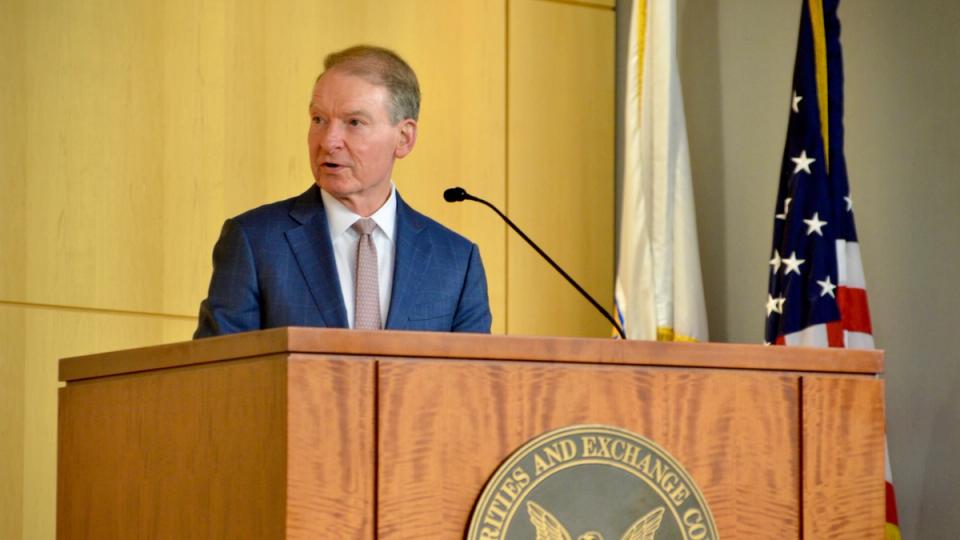
Remember that ripple of excitement? The one that promised to finally bring some much-needed regulatory clarity to the wild west of tokenized assets? Yeah, well, buckle up, buttercups, because the SEC just slammed the emergency brake.
Everyone, and I mean everyone in the digital asset space, was bracing for a specific exemption that was supposed to clarify the Securities and Exchange Commission’s position. It was like waiting for the sun to rise on a new financial dawn, a beacon in the fog of regulatory ambiguity. For months, the whispers and the educated guesses painted a picture of an SEC willing to draw a line, to say, ‘This is how we see your tokenized securities, and here’s a path forward.’ It was the kind of signal that could unlock trillions, allowing institutional money to finally pour into a market it’s been eyeing with a mixture of fascination and outright fear.
But Bloomberg Law dropped the bomb: the SEC is delaying this much-anticipated exemption. Poof. Gone. The clarity we were all sniffing the air for? It’s now a distant, perhaps even imaginary, scent.
What Was Supposed to Happen?
So, what was this magic exemption supposed to do? At its core, it was aimed at clarifying the regulatory treatment of tokenized assets. Think of it like this: imagine the internet was just starting, and nobody was quite sure what you could do with it. Could you sell things? Could you send messages freely? The tokenized asset exemption was meant to be the equivalent of the first set of universally accepted internet protocols, defining the rules of engagement. It was designed to address specific concerns about how certain digital assets, particularly those that mimic traditional securities, would be handled under existing securities laws. The hope was that this would provide a safe harbor for companies, allowing them to innovate with greater confidence, knowing they weren’t inadvertently tripping over some obscure rule.
This wasn’t just about a handful of tech startups; this was about the plumbing of future finance. We’re talking about real estate on the blockchain, fractional ownership of art, and supply chain finance made instantly liquid. The expectation was that this exemption would be the key that turned the lock, inviting major financial players into the digital asset arena with their formidable capital and established clientele.
The Unforeseen Glitch
But here’s the kicker, the unexpected twist in this narrative. The SEC’s delay isn’t just a bureaucratic hiccup. It’s a symptom of something far more complex and, frankly, concerning. The report hints at “concerns over third-party tokens.” This isn’t just about the structure of the exemption; it’s about the content flowing through the pipes. It suggests that the regulator is grappling with a fundamental question: if an asset is tokenized by entity A, but then widely traded or represented by entity B and C, who is ultimately responsible? This is the digital equivalent of tracing a package through a convoluted shipping network with dozens of intermediaries, and suddenly realizing the tracking information is all over the place.
My take? This delay signals a much deeper dive into the operational risks and the interconnectedness of the tokenized ecosystem. The SEC isn’t just looking at the shiny new token; they’re scrutinizing the entire supply chain, from creation to custody to trading. This is a massive platform shift we’re witnessing, and the regulators are, understandably, trying to avoid building a skyscraper on a foundation of sand. They’re worried about a domino effect where a failure in one corner of the tokenized world could cascade and threaten the broader financial system. It’s a cautionary tale, wrapped in regulatory language.
The agency is said to be concerned about the implications of the exemption for various types of third-party token issuers, potentially leading to uncertainty and increased risk for investors.
This, my friends, is where the rubber meets the road. It’s not just about the technology; it’s about the trust and the safeguards we can build around it.
What This Means for the Future
So, what does this mean for the bleeding edge of fintech? It means the anticipated boom in tokenized securities might face a longer, more arduous path. Companies that were poised to launch or scale their tokenization initiatives will likely have to operate in a gray area for longer, increasing their compliance burden and their risk exposure. It’s like trying to build a high-speed train line when the blueprints are still being debated by the zoning board.
This isn’t necessarily a death knell for tokenized assets, but it’s a significant speed bump. It forces a reckoning: are we ready for the full integration of these assets into our financial lives? The SEC’s hesitation suggests they believe we’re not quite there yet. They’re demanding more proof of concept, more strong risk management, and a clearer understanding of who holds the ultimate liability when things go sideways.
The enthusiastic futurist in me still sees the immense potential. Tokenization is still the next frontier for liquidity and efficiency. But this delay is a vital, albeit frustrating, reminder that building the future requires not just innovation, but also meticulous planning and, yes, the sometimes-painful process of regulatory alignment. We’re not just building new financial products; we’re building a new financial infrastructure, and that takes time, and a lot more than just exciting code.
This moment is a critical juncture. It’s a chance for the industry to demonstrate its maturity and for regulators to demonstrate their adaptability. The path forward will be defined by how we navigate these uncharted waters, together.