Creators cash in instantly.
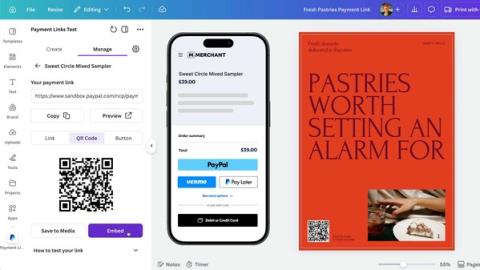
PayPal’s dropping payment links into Canva — yeah, that Canva, with its 265 million monthly users churning out graphics for entrepreneurs and small businesses. No more herding customers to clunky external sites or wrestling with standalone ecommerce setups. Just slap a PayPal, Venmo, or Pay Later checkout onto a digital design, QR code, whatever. Share it on social, email, texts, even print it for markets. Payments flow, no website needed.
Here’s the data angle: Canva’s user base dwarfs many fintech apps. Think about it — 265 million actives, mostly solopreneurs itching to monetize. PayPal’s SMB revenue already hits billions quarterly; this taps a fresh vein. Last year, creator economy payments topped $100 billion globally, per some estimates. PayPal snags a slice without building from scratch.
Taira Hall, PayPal’s SVP for SMB commercial, nails it:
“By pairing PayPal’s trusted global payment infrastructure with Canva’s creative workflow, we’re reducing the friction between inspiration and income and meeting them at point of need. With PayPal integrated directly in Canva, creators can move smoothly from creating to getting paid.”
Seamless. That’s the pitch. And it lands because creators hate friction — surveys show 70% abandon carts over complicated checkouts.
Why PayPal Chose Canva Now?
Timing’s everything in fintech. PayPal’s been bleeding market share to Stripe and Adyen in developer tools, but SMBs? They’re sticky. Canva exploded post-pandemic — user growth doubled since 2020. Pair that with Venmo’s social payment vibe, and you’ve got a trojan horse into Gen Z creators.
But look closer. This isn’t revolutionary code; it’s links and QR codes embedded in designs. Smart, sure. Yet PayPal’s PR spins it as a workflow killer. Reality? It’s an embed, not native checkout like Shopify’s canvas tools. Still, for Canva’s crowd — think Etsy sellers, freelancers — it’s gold. No coding, instant setup.
Emily MacDonald from Canva chimes in:
“Whether someone’s launching their first product, booking their next clients, or selling at a weekend market, having PayPal Payment Links right inside Canva means you can go from a bold idea to getting paid in just a few clicks, without ever leaving their design.”
Few clicks. That’s the hook. And data backs it: PayPal’s links already process millions in transactions monthly across platforms.
Market dynamics shift fast here. PayPal’s stock’s flatlined around $60-70 for years, but SMB volumes? Up 15% YoY. Canva integration could juice that — imagine 1% of those 265 million users averaging $100/month in sales. That’s $3 billion potential annual GMV for PayPal. Not pie-in-sky; Stripe saw similar lifts from Webflow embeds.
Does This Fix Creator Economy Pain Points?
Short answer: Mostly yes. Creators gripe about tools — Insta shops glitch, Etsy fees bite (6.5% + processing). PayPal’s rates? Competitive at 2.9% + 30¢ domestic. Venmo’s social angle fits TikTok drops perfectly.
Here’s my unique take, absent from the press release: This echoes PayPal’s early eBay days. Back in 2002, eBay auctions needed payments; PayPal became the default, exploding from 10M to 100M users in two years. Canva’s the new eBay for visuals — fragmented sellers needing trust. PayPal positions as the glue. Bold prediction: Expect 20% SMB growth attribution to Canva by Q4 2025, if adoption hits 10%.
Skeptical bit? Canva’s not ecommerce-first. Users might stick to PDFs, not payments. And competition looms — Linktree’s adding Stripe, Beehiiv’s baking in payments. But PayPal’s scale (430M accounts) crushes ‘em.
A single stat: Global creator payments market hits $500B by 2027, Goldman Sachs says. PayPal’s grabbing share without capex burn.
Risks in the Fine Print
Don’t get too cozy. Regulatory heat on buy-now-pay-later — PayPal’s own Pay Later faces CFPB scrutiny. Venmo’s peer transfers? Still crypto-curious but sidelined. And Canva? Enterprise pivot means free tier users (most creators) might hit paywalls on advanced links.
Yet the upside dominates. Small businesses, PayPal’s bread-and-butter, get a lifeline amid inflation. One-paragraph wonder: This integration isn’t flashy AI, but it’s pragmatic fintech — solving real workflow gaps with trusted rails.
PayPal wins on trust metrics too. 80% consumer preference in PYMNTS surveys. Canva amplifies that.
🧬 Related Insights
- Read more: Bolt Axes a Third of Team to Survive on AI Lifeline
- Read more: Gen Z’s BNPL Power Play: No Loyalty, Just Smart Hacks
Frequently Asked Questions
What are PayPal payment links in Canva? PayPal lets Canva users embed checkout links or QR codes directly into designs for instant payments via PayPal, Venmo, or Pay Later — no site required.
Will Canva PayPal integration replace Etsy or Shopify? Not fully — it’s for quick links, not full stores. Best for one-offs like digital downloads or services.
How much does PayPal charge Canva creators? Standard rates: 2.9% + $0.30 per domestic transaction; international higher. No setup fees.