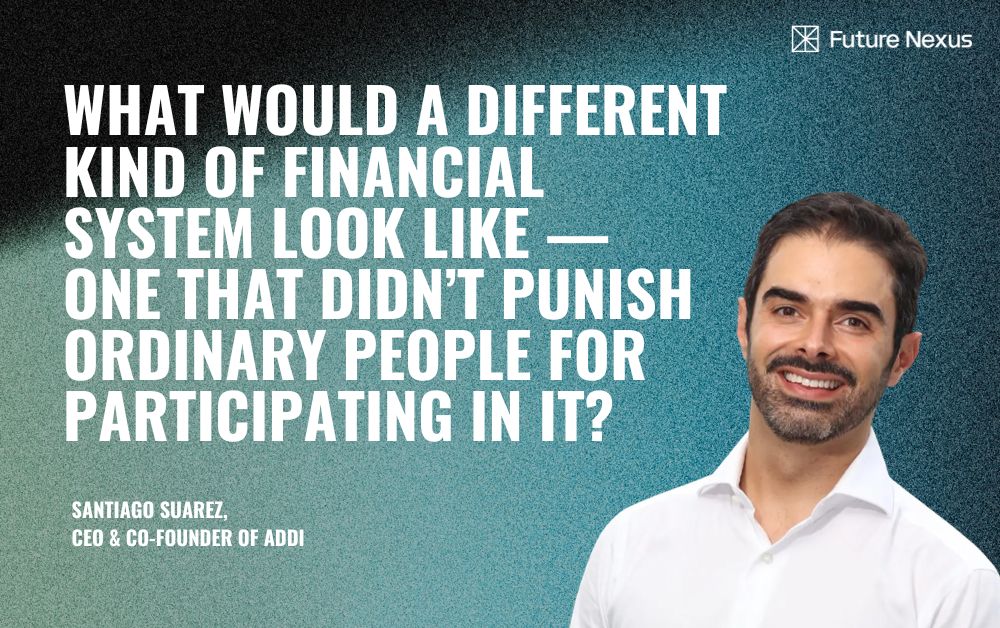
Santiago Suarez didn’t mince words when his family’s $30,000 mortgage ballooned to $60,000 in three years flat—outrageous interest on interest, he called it, right before the bank yanked their apartment, car, even the home PC.
That’s 1999 Colombia, folks. Their version of our 2008 meltdown. And it’s the grudge fueling Addi, this buy-now-pay-later outfit that’s somehow turned profitable in a market where banks bleed consumers dry.
“Wouldn’t it be great if we could actually do a different way of doing banking, lending or consumer finance in Colombia?” – Santiago Suarez, co-founder and CEO, Addi
Look. Suarez could’ve stayed in the U.S., Yale pedigree in pocket, 15 years of cushy gigs. Instead, he jets back to Bogotá to poke the bear: three banks hogging 70% of assets, fees for logging in twice a month, ATM charges from your own damn bank. No zero-fee accounts anywhere. Only one in five Colombians snag credit; fewer touch a credit card.
Why Does Colombia’s Banking Suck So Bad?
It’s exclusion baked in. Dad buys a $9 breakfast, pays over 36 months on plastic—ends up shelling $40. Short-term dumb buys morph into lifetime anchors. Suarez saw it, hated it, built Addi to flip the script: credit that lifts, doesn’t crush.
But here’s my cynical sniff test after two decades chasing Valley unicorns. Who’s really cashing in? Addi boasts 35,000 merchants, 3 million users, $1.3 billion GMV annualized, $200 million ARR. Over 100% YoY growth. One in 10 Colombian adults hooked. Sounds peachy.
They run lean—tech-first, no bloat. Zero-interest options, short installments to dodge overstretch. “No one wants to pay for a T-shirt in 12 months,” Suarez quips. Team’s stacked: Amazon, Capital One vets meshed with local know-how. No lazy copy from Brazil or U.S. models. Built their own ecosystem, merchant net to consumer app.
Early call: turned down a mega-merchant’s white-label bid. Wanted the brand front and center. Smart? Yeah, if loyalty sticks. Risky if big dogs push back.
Can Addi Actually Profit Without Screwing Customers?
Profitable already—net income positive. In high-interest regulated Colombia, that’s no small feat. They sidestep fees by slashing costs, serving the unbanked without gouging. But scale’s the rub. That merchant network? Costly upfront. Now paying off.
Zoom out. This ain’t just feel-good fintech. Suarez’s mission: “pride and abundance” for consumers, businesses. Noble. But peek behind: BNPL’s a razor blade—giveaway loans upfront, merchants pay the freight. Addi’s eating the regulated rates, betting volume crushes it.
My unique angle? Echoes of Affirm’s U.S. stumble. They promised revolution, hit profitability walls as rates rose, delinquencies spiked. Colombia’s no different—economic wobbles, and those short plans could curdle if jobs dry up. Bold prediction: Addi thrives locally but stalls international without owning the payment rails. Who makes money? Merchants hooked on sales boost, consumers on easy credit, Addi on volume. Banks? Fuming.
Government fixed the 1999 mess—contained failures, axed toxic tools. But the cartel vibe lingers. Fees everywhere. Exclusionary as hell.
Addi’s play: tech edge for low costs, access. World-class crew for local woes. It’s tailored—no U.S. transplant.
“It was a big investment to build our own network, but once we hit scale, you could actually see the benefits,” Suarez says.
Numbers don’t lie: exploding growth, sticky users. Brand in the sale? Genius for a market starved for trust.
Is Addi’s Colombia Magic Exportable?
Skeptical vet mode: Colombia’s peculiar—high regs, low penetration, cultural debt aversion twisted by banks. Addi fits like a glove. Export to Mexico? Brazil’s Nubank already owns that turf. U.S.? Klarna’s bleeding. They’ll feast domestically, maybe nibble LatAm neighbors.
But the real test: regulatory moat. Banks won’t fade quietly. If Addi forces fee wars, great. If not, it’s a side hustle in a broken system.
Suarez’s origin rage? Foundational. Unfairness festers. Addi’s no panacea, but damn if it isn’t swinging.
Who’s winning? Not the old guard, yet.
🧬 Related Insights
- Read more: Visa and Ramp’s AI Agents: The End of Bill-Paying Drudgery?
- Read more: Four Fintechs Vowing to Rescue Dull Banks – Skeptical Take
Frequently Asked Questions
What is Addi and how does it work in Colombia?
Addi offers buy-now-pay-later credit with 0% interest short plans, no hidden fees, targeting underserved Colombians via 35,000 merchants.
Can Addi really beat Colombia’s big banks?
Profitable now with 3M users, but entrenched fees and oligopoly mean it’s an uphill battle without policy shifts.
Is BNPL like Addi safe for everyday Colombians?
Designed to prevent over-indebtedness with short terms, but economic dips could spike defaults—like anywhere.