Everyone figured modernizing corporate treasury meant war with legacy cores. Rip it out, start over, brace for years of pain and compliance nightmares. That’s the script banks and their mid-market clients have recited for decades.
KeyBank and Qolo’s virtual account management platform smashes that expectation. It’s live, processing over $40 billion in transactions, and it doesn’t touch the core. Suddenly, treasury teams get real-time visibility across dozens of accounts—without deploying that small army for reconciliations.
Here’s the thing.
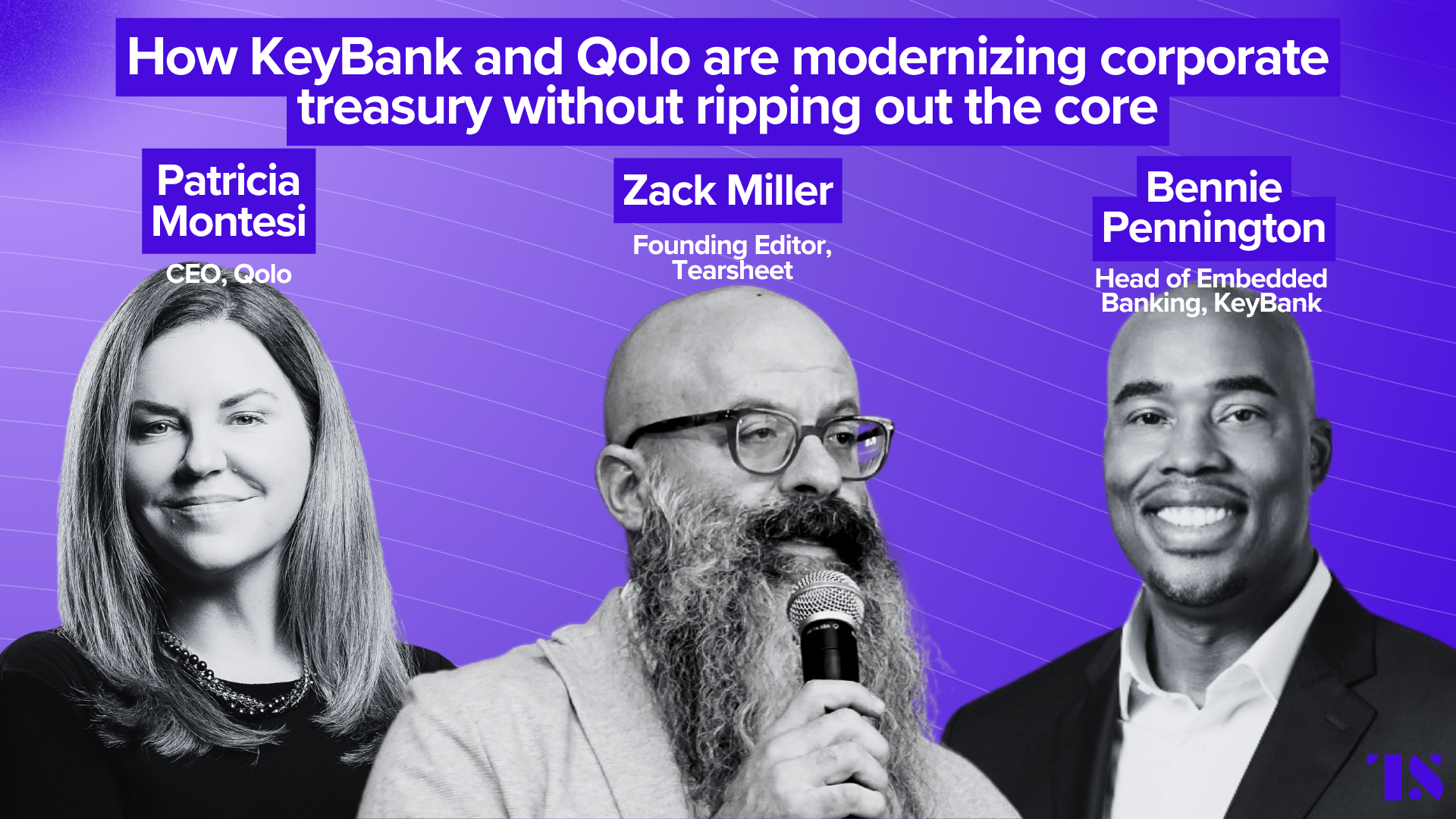
“Some of their biggest pain points were being able to see their balances,” said Bennie Pennington, Head of Embedded Banking at KeyBank.
Clients—real estate outfits, software firms, energy traders—were screaming for it. Consolidated views. Intraday data. smoothly payment flows into their ERP systems. Legacy batch files? Manual drudgery? Not anymore.
Why Virtual Account Management Beats a Full Core Overhaul?
Legacy systems chug along on batch processing, spitting out reports that arrive after the money’s moved. Banks know clients hate it, but replacing the core? That’s a multi-year odyssey—rewriting compliance, retraining staff, risking outages that could tank reputations.
Qolo’s layer changes the architecture entirely. Virtual accounts sit above the core like a slick API dashboard. Open sub-accounts instantly. Build fund hierarchies on the fly. Route payments flexibly—all in real time. No disruption to the bank’s plumbing.
Patricia Montesi, Qolo’s CEO, nails it:
“Legacy systems, think batch files, manual reconciliation, this visibility that takes a small army to actually bring together and unify.”
They met KeyBank where it stood—decades of custom workflows intact—and overlaid the fix. It’s not hype; it’s $40 billion in proof.
But.
KeyBank didn’t just pick Qolo off a list. They grilled clients, dissected lost deals, fired off an RFI stacked with demands: API polish, rapid deployment, OFAC tweaks, sub-account speed. Qolo flexed—custom APIs, real-time creation, partnership vibe.
“When we met the team and recognized the ability for us to interact and feel like we had a true partner, it was obvious,” Pennington said.
A year in, seven clients onboard. Healthcare claims. Energy fund silos. Even a big FI ledgering for its users. Accounts spin up digitally faster than rivals. APIs pull data into multiple softwares—impossible before.
How Does KeyBank-Qolo VAM Actually Work for Treasurers?
Picture a mid-market firm juggling 20+ accounts. Cash in from customers hits one virtual ledger; payables fire from another. All reconciled live, no spreadsheets. Hierarchies nest funds by project, client, region—compliance baked in.
The why? Speed kills in treasury now. Intraday visibility spots shortfalls before they bite. APIs glue it to QuickBooks, SAP, whatever. Banks win stickiness; clients ditch manual hell.
Montesi again:
“We are solving true pain points for their commercial clients and their corporate treasurers. We have moved billions of dollars in the system, but what we’re more importantly proving is that we can do it at scale, securely and profitably.”
This isn’t isolated. VAM’s the connective tissue binding siloed rails—ACH, wires, cards—into one view. It’s the missing middleware for embedded finance.
Now, my take—the insight nobody’s shouting yet. This echoes the ’90s ATM boom: banks didn’t gut branches; they overlaid networks that made them indispensable. VAM does the same for digital treasury. Bold prediction? Mid-tier banks ignoring this lose 20% client share in five years to overlay players like KeyBank. Cores stay, but relevance hinges on layers like Qolo’s.
Corporate spin calls it “modernization without disruption.” Fair, but undersells the shift. It’s not evolution—it’s sidestepping obsolescence. Banks clinging to core myths? They’ll watch fintechs (or savvier incumbents) eat their lunch.
Results scream scale. $40B moved. Clients switching on VAM alone. One shop picked KeyBank after benchmarking speed—no contest.
Look, treasury’s been ripe for this. Post-pandemic, cash moves 24/7; firms demand matching agility. Legacy lags; VAM catches up.
The partnership’s grit shines. KeyBank dictated; Qolo iterated. Roadmap co-built, respecting sunk costs. That’s rare in bank-fintech dances—usually one’s shoving, other’s folding.
Energy traders silo funds by unit. Healthcare notches claims precisely. FIs ledger client cash digitally. Range proves versatility.
Bigger picture: VAM commoditizes treasury ops. Banks plug in, clients self-serve accounts, rails flex. Profit? Sticky volume, not one-off fees.
Skeptics? Sure—scale beyond KeyBank? Compliance at mega-volume? But $40B says yes. And APIs promise extensibility.
This rewires expectations. No more core ripouts as modernization’s price. Overlays win.
🧬 Related Insights
- Read more: Pension Run-Ons: The Bold Bet Keeping Billions in Retirees’ Pockets Longer
- Read more: Gen Z’s BNPL Power Play: No Loyalty, Just Smart Hacks
Frequently Asked Questions
What is virtual account management?
VAM creates virtual ledgers atop real accounts for real-time tracking, hierarchies, and payments—without changing core systems.
How does KeyBank’s VAM platform with Qolo work?
It overlays APIs for instant sub-accounts, intraday visibility, and ERP integration, processing billions securely on legacy rails.
Will VAM replace traditional bank accounts?
No—it enhances them, mapping virtual structures to physical ones for better control and speed.