For the average person, this means your personal AI assistant—the one helping you research vacation spots or find the best deal on a new gadget—might soon be able to actually book that hotel or click ‘buy’ on that item, all without you lifting a finger. This isn’t just about convenience; it’s a fundamental step towards AI agents becoming active participants in the digital economy, capable of executing transactions on our behalf. The implications for how we shop, manage personal finances, and even how businesses operate could be profound.
The Dawn of Autonomous E-commerce
It’s no secret that AI agents have been getting smarter. They can process information, make recommendations, and even draft emails. But the crucial bottleneck? Actually spending money. Until now, handing over the reins for even simple online purchases often involved clunky workarounds or manual intervention. This new integration, quietly rolled out, finally bridges that gap, allowing AI agents to interact with the existing payment infrastructure.
Link’s wallet for agents, built atop Stripe’s new Issuing for agents, gives these AI entities programmatic access to payment methods. Think one-time-use virtual cards or Shared Payment Tokens (SPTs), all securely linked to your existing bank accounts or credit cards without ever exposing your raw credentials. It’s an architectural sleight of hand designed to grant capability without compromising security.
You can now give agents programmatic access to Link and the ability to get a one-time-use card or a Shared Payment Token (SPT), backed by the cards and bank accounts already in your wallet.
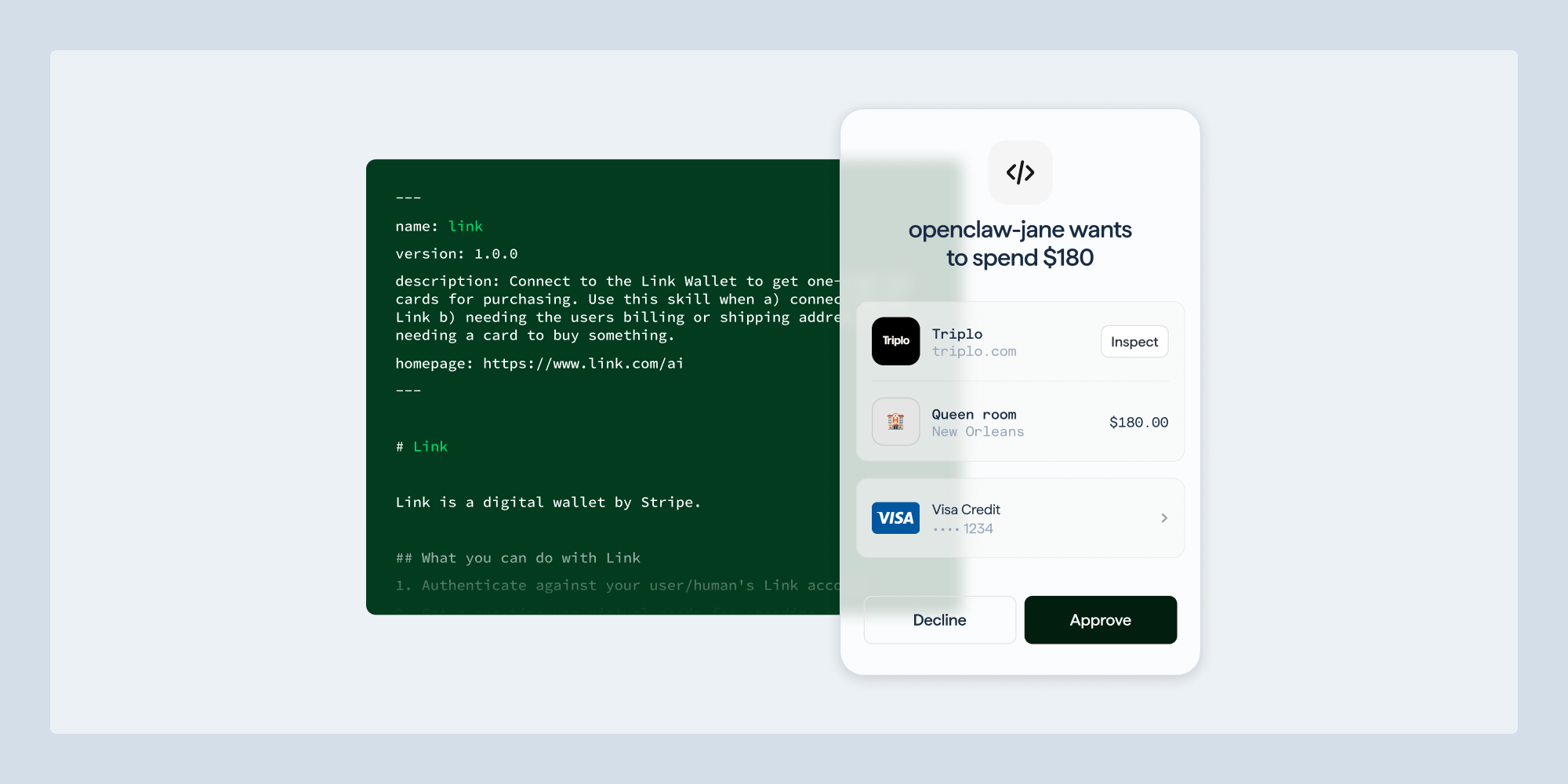
This means consumers can grant their personal AI agents, like OpenClaw, the authority to make specific, authorized purchases. The system isn’t a free-for-all; each spend request can be reviewed and approved by the user, either through the Link web interface or its mobile apps. This granular control is paramount, ensuring that while agents gain power, users retain oversight.
Why This Changes the Game for Developers
For businesses and developers building these consumer-facing AI agents, the benefit is clear: no need to reinvent the wheel. Link essentially provides a ready-made wallet infrastructure. They can abstract away the complexities of various payment options—cards, SPTs, and soon, stablecoins and other methods—handling fund flow and tapping into Link’s massive customer base of over 200 million users. This significantly lowers the barrier to entry for creating sophisticated AI-powered services.
Imagine a shopping agent recommending apparel. With this new system, once a consumer grants OAuth access, the agent can initiate a spend request for a specific purchase. The user then receives a notification, reviews the details—amount, currency, merchant—and approves. The agent then receives a secure, temporary payment credential to complete the transaction. The user can track all agent spending within their Link account, offering transparency and control.
Stripe’s Foundation: A New Era for Issuing
Stripe’s role here is foundational. Issuing for agents provides the underlying APIs that developers can use to build highly customized agentic wallets and cards. This allows for a deep level of control, enabling businesses to design their own user experiences, manage fund flows, set card-level permissions, and implement fraud controls at the point of authorization.
The potential use cases are extensive. Developers could automate their own business expenses. Fintech providers could embed agent-issued cards for streamlined expense management. Vertical SaaS platforms could offer branded agent payment solutions to their SMB customers. Marketplaces could even issue cards to sellers, allowing their agents to automate supplier payments and logistics. It’s a powerful toolkit for businesses looking to inject efficiency and automation into financial workflows.
Is This Too Much Power, Too Soon?
Here’s the rub: while the technology promises efficiency and innovation, the rapid delegation of financial authority to AI raises questions. The current model requires user approval for each transaction, which is a sensible starting point. However, the stated plan to expand controls to include spending limits and automatic, unapproved actions is where prudence is required.
The market dynamics are shifting. We’re moving from AI as an information processor to AI as an economic actor. This transition, while exciting, demands a cautious approach to governance and security. The infrastructure is being built, but the guardrails for widespread, autonomous AI spending are still very much in development. This isn’t a failure of the technology, but a natural consequence of pushing into uncharted territory. The market will undoubtedly test these systems, and the resulting adaptations will shape the future of digital commerce.
🧬 Related Insights
- Read more: The New Payment Standard Built for Machines, Not People—And That’s the Problem
- Read more: What is PSD2?
Frequently Asked Questions
What does Link’s wallet for agents do? Link’s wallet for agents allows personal AI assistants to make authorized purchases on behalf of users by providing them with secure, one-time-use virtual cards or tokens, backed by the user’s existing payment methods.
How does Stripe Issuing for agents work? Stripe Issuing for agents provides developers with the APIs to build customized payment experiences for AI agents, including virtual card creation, spending controls, and transaction monitoring.
Will this replace human oversight in online purchases? Initially, user approval is required for each transaction. Future features may allow agents to act autonomously within pre-set limits, but the current system emphasizes user control.