It’s easy to get lost in the corporate speak of tech announcements, but what Stripe Radar’s latest expansion actually signifies is a subtle, yet profound, shift in how your online transactions will be safeguarded. Think about the last time a suspicious charge appeared on your credit card statement, or worse, you had to dispute a fraudulent purchase. This upgrade, announced at Stripe Sessions, aims to put more digital guardrails between you and those headaches, across a much wider digital frontier.
Radar, the company’s AI-powered fraud prevention engine, is no longer confined to just credit card transactions processed through Stripe. It’s now a sweeping net, aiming to catch high-risk activity across virtually all payment methods—from bank debits and buy-now-pay-later schemes to digital wallets and even crypto. This means that the lessons learned from a compromised credit card could theoretically help block a fraudulent attempt on your Klarna purchase or a suspicious transaction in your crypto wallet, even if those are handled by different processors. The network effect of shared intelligence is key here; one detected bad actor can, in theory, be flagged across the entire ecosystem.
Beyond the Card: A Multiprocessor World
Fraudsters, as we know, are an adaptive bunch. They don’t stick to one lane. If they can’t crack a credit card payment, they’ll pivot to abusing discount codes across multiple accounts or orchestrating elaborate schemes with pay-as-you-go services. Stripe’s move to extend Radar’s reach speaks directly to this evolving threat landscape. They’re not just defending the front door; they’re fortifying the entire perimeter.
Consider the implications for businesses. They can now use Stripe’s signals to identify and potentially prevent fraud off-platform as well. This includes identifying transactions likely to trigger early warnings from card networks or predicting those that might end up as costly disputes. It’s a move towards giving businesses a more holistic view of risk, not just for transactions flowing directly through Stripe, but for their entire digital operation.
The Rise of Sophisticated Abuse
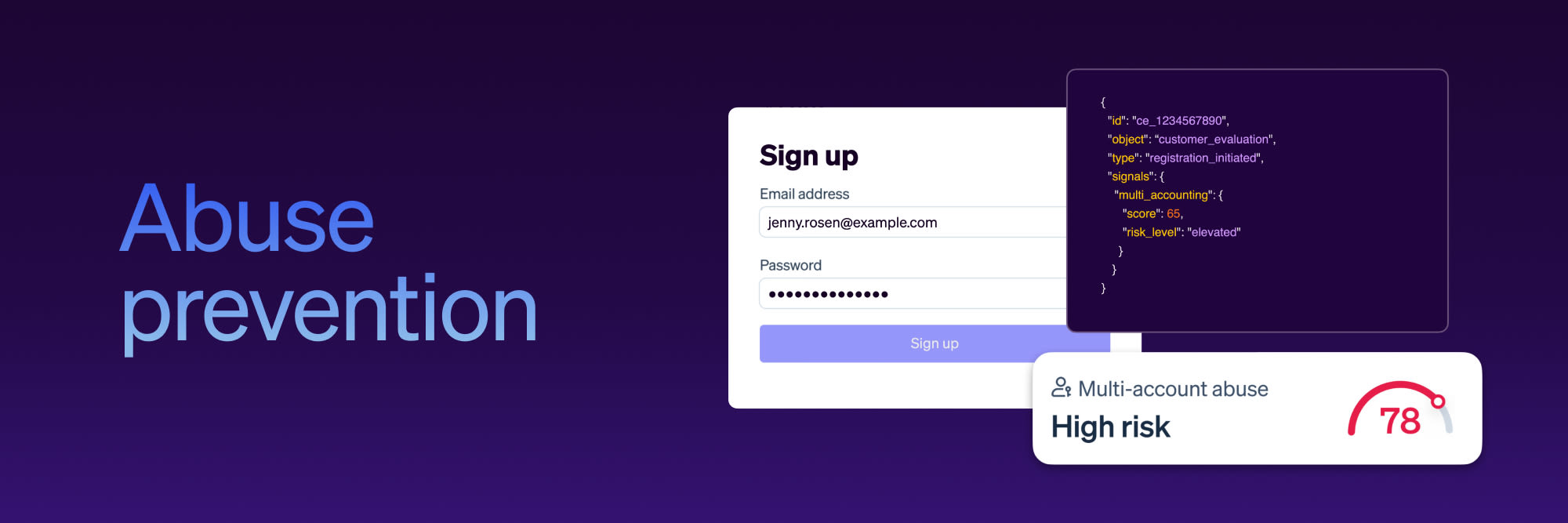
This expansion also tackles newer, more insidious forms of fraud, particularly those targeting the burgeoning world of AI services. We’re talking about multi-account abuse, where bad actors create numerous identities to exploit free trials, stack promotional offers, or obscure their true activity. Stripe claims its updated Radar can now evaluate new accounts in real-time, using a wealth of data points like device fingerprints, IP addresses, and email domains gathered across its vast network. The numbers they cite are stark: ElevenLabs, an AI company, reportedly blocked 2,000 users a day from abusing its free tier after implementing these protections.
Then there’s pay-as-you-go abuse, a growing concern as consumption-based pricing models become more prevalent. Imagine a user racking up thousands of dollars in cloud compute services over a month, only to disappear before the bill arrives. Radar’s new capabilities aim to predict this nonpayment abuse, allowing businesses to intervene proactively.
Radar now addresses both, along with the ability to use custom fraud models. For businesses with more complex risk profiles, Radar now offers custom fraud models.
This isn’t just about blocking transactions; it’s about an architectural shift in how fraud prevention operates. It’s moving from a reactive, transaction-by-transaction defense to a proactive, network-aware system that anticipates threats. The ability for businesses to feed their own unique signals into custom fraud models, which Stripe then augments with its global data, represents a significant leap. It’s about tailoring defenses to the specific contours of a business’s operations, a level of sophistication previously out of reach for many.
My Take: The AI Arms Race Heats Up
What’s truly fascinating, and perhaps a little unsettling, is the implicit acknowledgment that the fraud landscape is now fundamentally intertwined with the AI arms race. Fraudsters are using AI to devise new attack vectors, and companies like Stripe are deploying their own AI to counter them. This isn’t just about protecting payments; it’s about safeguarding the integrity of digital commerce as it becomes increasingly automated and intelligent. The real innovation here isn’t just the expanded coverage, but the underlying architecture that allows for such pervasive signal sharing and custom model deployment. It’s a proof to how deeply embedded AI is becoming in the plumbing of the internet economy, for better or worse.
Fighting the Paperwork War: Disputes Get Smarter
Beyond direct fraud prevention, Stripe has also beefed up its tools for handling disputes—those often-frustrating back-and-forths that occur when a customer claims a charge was unauthorized. The new Radar introduces enhanced evidence submission capabilities, including smarter evidence gathering and automated libraries. This means businesses can potentially present a more compelling case when a dispute arises, armed with better data and more efficient processes. For consumers, this could mean fewer false positives slipping through and a smoother resolution when legitimate issues crop up. It’s a subtle but important aspect of trust-building in the digital marketplace.
Stripe’s expansion of Radar signals a maturing of its fraud prevention capabilities, moving beyond a simple transactional shield to a more comprehensive risk management ecosystem. For the average person who shops online, buys digital services, or uses BNPL, this means an invisible layer of protection is getting stronger and broader. It’s a quiet battle, fought with algorithms and data, but one that directly impacts the security of your digital wallet and the trustworthiness of the online businesses you interact with every day.
🧬 Related Insights
- Read more: Latitude Emerges from Stealth with $8M: Stablecoins Eye Cross-Border Dominance in Shaky Fintech Week
- Read more: Open Banking Explained: How PSD2, APIs, and Data Sharing Are Reshaping Finance
Frequently Asked Questions
What does Stripe Radar protect against?
Stripe Radar now protects against a wide range of fraud, including high-risk transactions across all payment methods, multi-account abuse, pay-as-you-go abuse, and fraudulent bot-driven payments. It also offers tools to help businesses manage disputes more effectively.
Will this affect how I pay for things online?
For consumers, the impact should be largely positive, leading to fewer fraudulent charges and disputes. Businesses using Stripe will benefit from enhanced protection and risk management tools.
Is this a new service, or an upgrade?
This is a significant expansion and upgrade to Stripe Radar, building on its existing AI-powered fraud prevention capabilities with broader payment method coverage, new fraud detection signals, and custom model features.