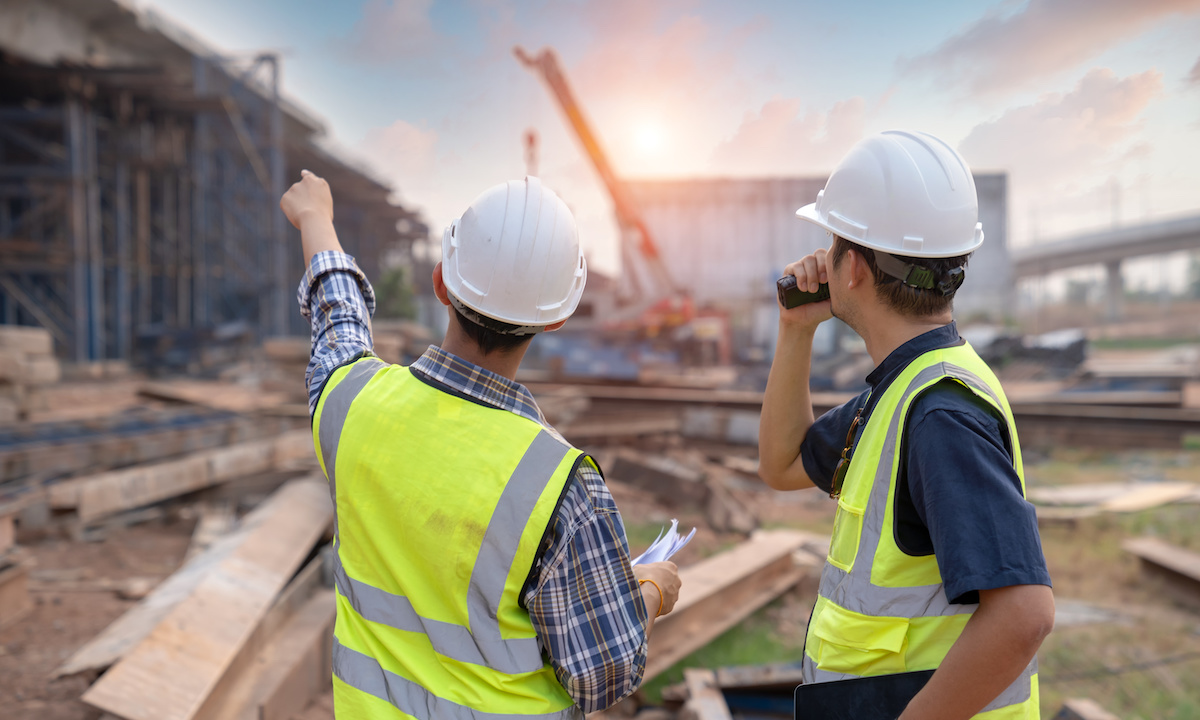
The construction industry. Remember when everyone was crowing about how AI would revolutionize white-collar work, crunching numbers and drafting emails? Yeah, well, turns out the real action, or at least the most pressing need for silicon intervention, might be on the dusty, dangerous job sites where people actually build things. For decades, construction has stubbornly clung to its grim reputation: 8% of the private sector workforce, but a whopping 20% of worker fatalities. That grim statistic hasn’t budged. Until now, maybe.
We’re talking about AI that can apparently spot a missing hard hat faster than a seasoned supervisor. This isn’t some futuristic pipe dream; it’s being pitched as a real-time safety solution. The idea is simple: cameras on site feed video into an AI system, which flags infractions. Think about that. Years of safety training, millions spent on compliance officers, and now a computer algorithm is supposed to be the ultimate watchdog.
Who’s Actually Making Money Here?
That’s the perennial question, isn’t it? When a shiny new tech promises to solve a deep-seated, life-or-death problem, you can bet there’s a company lining up to sell you the solution. The PR angle is always strong: safer jobs, fewer accidents, happier workers. But let’s cut through the noise. Who is developing this tech? Who’s installing the cameras? Who’s selling the software licenses? Because that’s where the real money flows.
“Our system offers a proactive approach to safety, identifying risks that might be missed by traditional oversight methods.” This is the kind of carefully worded statement you see. It sounds good. It sounds responsible. It also conveniently sidesteps the ‘cost’ and ‘who benefits’ angles.
This kind of AI, often referred to as computer vision in the industry – a term that always sounds a bit like it’s about to sell you a pair of augmented reality glasses – is being deployed. The promise is that by flagging violations like missing hard hats, hard-to-see machinery, or unsafe climbing practices, it can prevent accidents before they happen. It’s supposed to augment, not replace, human oversight. A nice thought, assuming the people paying for it actually want more safety and not just a way to shift blame when something inevitably goes wrong.
Is This Just Another Vendor Trotting Out Hype?
Frankly, it feels like it. We’ve seen this play out before. Remember when drones were going to be the ultimate construction inspectors? Then it was IoT sensors. Now it’s AI-powered video analysis. Each time, the narrative is the same: a technological silver bullet for an age-old problem. The technology itself might be impressive, capable of distinguishing a human head from a toolbox with startling accuracy. But the real test isn’t the tech’s cleverness; it’s its effectiveness in preventing fatalities and whether the cost of implementation is justified by genuine improvements in safety, or just by creating a new billable service.
There’s an inherent skepticism that comes with covering Silicon Valley for two decades. You learn to recognize the patterns: the boundless optimism, the carefully curated success stories, and the underlying drive to extract maximum value from any given problem. Construction safety is a massive, high-stakes issue. It’s ripe for disruption, sure, but also ripe for exploitation. The question isn’t if this AI can spot a hard hat violation, but if it will lead to fewer workers going home in a body bag, and who pockets the profits for that outcome.
The historical parallel here isn’t some groundbreaking AI paper; it’s the decades-long saga of safety equipment manufacturers, OSHA regulations, and the constant struggle to enforce basic rules on busy, chaotic sites. This AI is just the latest tool in that ongoing battle. Will it be a game-changer, or just another expensive gadget gathering dust on a foreman’s tablet?
What Happens to the Supervisors?
Naturally, the companies pushing this tech will tell you it assists supervisors, freeing them up for more complex tasks. What they often don’t say is that it also makes it incredibly easy to monitor the supervisors themselves. If the AI catches something the human missed, well, that’s a performance issue, isn’t it? It’s a classic Silicon Valley move: create a tool that ostensibly helps, but also introduces a new layer of surveillance and accountability, often for the benefit of management and vendors, not necessarily the frontline worker.
It’s a tough industry, and safety has always been a precarious balance between necessary caution and economic pressures. Introducing AI adds another variable. Will it truly enhance a supervisor’s ability to keep people safe, or will it become another bureaucratic hurdle, another source of data to be analyzed, filed, and potentially weaponized? Only time, and a deep dive into the financials of the companies involved, will tell for sure.
🧬 Related Insights
- Read more: Vietnam, Korea QR Payments Connect: Who Wins?
- Read more: StarCompliance Embeds AI for Compliance Clarity
Frequently Asked Questions
What does this AI do on a construction site?
It uses cameras and computer vision to monitor the site in real-time, identifying safety violations such as workers not wearing required personal protective equipment (PPE) like hard hats.
Will this AI replace construction supervisors?
The companies offering the technology claim it’s designed to assist and augment supervisors, not replace them, by handling routine monitoring tasks.
How does this AI improve construction safety?
By providing immediate alerts about violations, it aims to prevent accidents before they occur, theoretically reducing injuries and fatalities on job sites.