Imagine a world where your company’s financial heartbeat isn’t a monthly gasp, but a constant, vibrant pulse. That’s the future Abacum is building for. This isn’t just about faster reports; it’s about transforming the very DNA of financial operations, turning CFOs from back-office gatekeepers into strategic architects of growth. Abacum’s CEO, Julio Martinez, isn’t just talking about AI-powered tools; he’s talking about an AI-native paradigm shift, akin to the internet transforming communication or mobile devices reshaping daily life.
This move feels like the financial world finally catching up to the real-time, always-on reality we already live in everywhere else. For too long, finance departments have been stuck in a time warp, deciphering ancient spreadsheets and waiting for monthly closes. Abacum is essentially handing them the keys to a time machine, not to go back, but to sprint forward.
Is Abacum’s “AI Native” Approach Truly Different?
Martinez is quick to differentiate. “AI native” isn’t just a buzzword; it’s about an architecture built from the ground up for AI, not an add-on. Think of it like this: legacy finance software is an old house that someone’s trying to cram a smart home system into. It’s clunky, it’s limited. Abacum is a brand-new smart home, designed from the foundation with AI at its core. This means the AI isn’t a guest; it’s a resident, woven into the very fabric of how the system operates. It means data cleaning, anomaly detection, and forecasting aren’t chores; they’re automated processes that free up human minds.
And here’s where it gets really interesting: this AI isn’t some detached chatbot you have to prompt. It’s embedded, invisible, and utterly functional. Martinez paints a picture where up to half your budget modeling is done automatically. Imagine shedding a week of work. That’s not just a productivity boost; that’s reclaiming brainpower for higher-level thinking.
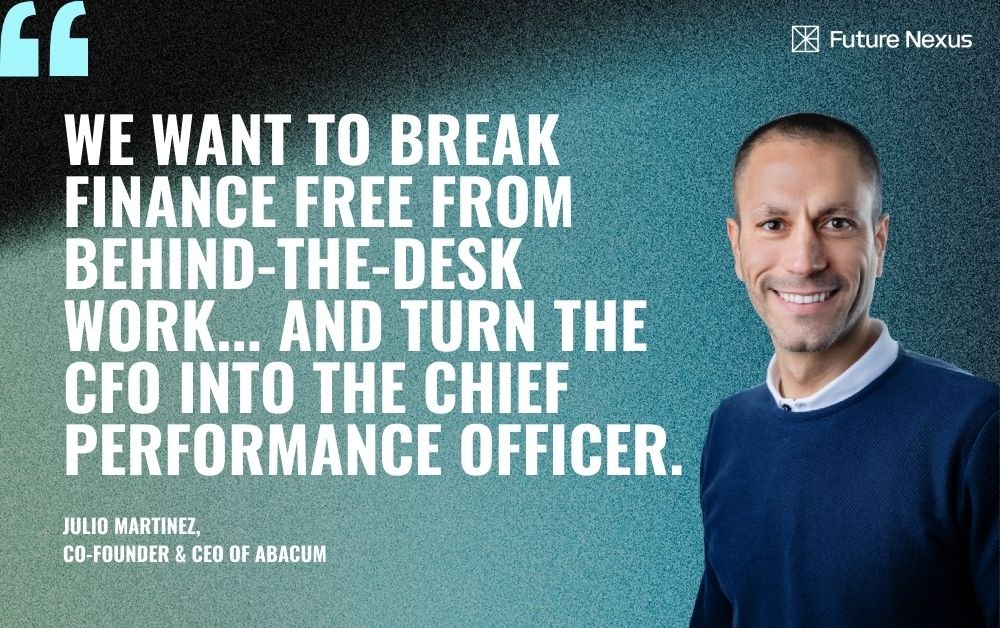
“We want to break finance free from behind the desk work, connect all the stakeholders in a business so they become a trust advisor, and turn the CFO into the Chief Performance Officer driving performance in the business and making better decisions.” — Julio Martinez, co-founder and CEO of Abacum
This quote is the thesis. It’s the destination. The CFO, traditionally the guardian of the ledger, is morphing into the orchestrator of business performance. It’s a fundamental redefinition of the role, moving from reactive reporting to proactive strategy. Abacum’s platform is the engine for this transformation, providing the cognitive clarity Martinez describes – a clear view across sales pipelines, product launches, and operational bottlenecks, all rendered in real-time.
What Does This Mean for Your Day-to-Day?
For the finance professional, this is like ditching the quill pen for a supercomputer. The tedious, error-prone drudgery of data wrangling — a task that often consumes half of a finance expert’s week — is being automated. This isn’t just about saving hours; it’s about rescuing talent from mind-numbing repetition. When that time is freed, the real magic happens. Finance teams can finally step out from behind their desks and become true business partners, armed with real-time insights into what’s really driving the company forward.
Scenario planning, once a painstaking, multi-day endeavor, becomes an on-demand superpower. Abacum’s Scenario Studio allows for complex, constraint-based modeling in real-time. This isn’t just about better forecasts; it’s about agility. In a world of constant economic shifts, being able to instantly model the impact of a supplier delay or a competitor’s move isn’t a luxury; it’s a survival skill. It allows companies to pivot faster, manage risk more effectively, and seize opportunities before they vanish.
The human element, thankfully, isn’t being erased. Martinez rightly points out that the art of business partnering, navigating complex relationships, and making judgment calls in uncertain times will remain deeply human. These are the skills that AI can support, but not replicate. It’s the perfect symbiosis: AI handles the heavy lifting of data and modeling, while humans provide the strategic direction, the negotiation finesse, and the ethical compass.
This shift is more profound than just a new software tool. It’s a proof to AI’s potential to fundamentally redesign how businesses operate. Abacum isn’t just selling a platform; they’re selling a future where finance teams are dynamic, strategic powerhouses, driving performance and shaping the trajectory of their companies with unprecedented insight and speed. The future of finance, it seems, is no longer just about the numbers; it’s about the performance those numbers enable.
🧬 Related Insights
- Read more: AI Unleashed: Fintech Funding Hits Record Valuations in Q1 2026
- Read more: SoFi Unlocks FedNow Send/Receive: Instant Transfers Live
Frequently Asked Questions
What does Abacum’s platform actually do? Abacum offers an AI-native platform for financial planning and analysis (FP&A), helping businesses with revenue forecasting, headcount planning, and financial scenario modeling. Its goal is to automate tedious tasks, provide real-time financial clarity, and empower CFOs to become performance drivers.
Will AI replace finance professionals? Abacum’s CEO suggests AI will automate repetitive tasks, freeing up finance professionals for more strategic, human-centric roles like business partnering, negotiation, and judgment calls. The focus is on augmenting human capabilities, not replacing them entirely.
How does Abacum’s AI differ from other “AI-powered” tools? Abacum emphasizes its “AI-native” architecture, meaning AI is built into the core system for flexibility and transformative impact, rather than being an add-on to legacy software. AI is designed to be embedded and invisible in workflows, generating models automatically and cleaning data proactively.